Today, Saudi Arabia at the heart of the Gulf crisis, stands as the cornerstone of regional trade stability, proving that logistics is the backbone of economic sovereignty. We at the Arab Center for Consulting believe that proactive infrastructure investment transformed geopolitical challenges into real opportunities. Events proved that strength lies in supply chain resilience in Saudi Arabia, reinforcing its global status.
Why maritime corridors became a high economic risk
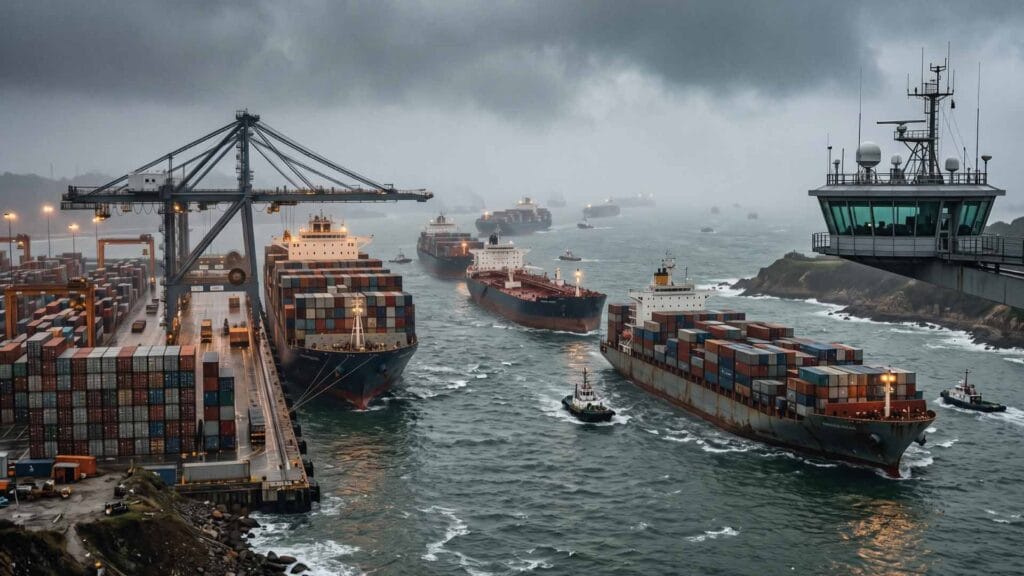
Increasing tensions around the Strait of Hormuz led to a sharp spike in maritime insurance costs during tensions, making alternatives urgent. The risks of the Strait of Hormuz to regional trade emerge as a direct barrier to essential commodity flows, as a fifth of global oil passes through it. Our team at the Arab Center confirms that the impact of the Strait of Hormuz disturbance on import and insurance costs requires flexible defensive strategies. Here, Saudi Arabia in the Gulf crisis appeared as a leader by absorbing shocks and providing secure alternative routes via the Red Sea. The interaction between Saudi Arabia and the Gulf crisis illustrates how solid infrastructure prevents economic contraction. Saudi Arabia at the heart of the Gulf crisis, proved its worth.
Order a feasibility study for a logistics center serving Saudi Arabia.
How the National Strategy raised transport and logistics readiness for Saudi Arabia at the heart of the Gulf crisis
The Kingdom’s readiness was not accidental but the result of the comprehensive National Transport Strategy. Thanks to the National Transport and Logistics Strategy, the Logistics Performance Index and the Kingdom’s competitiveness improved significantly on the international map. We at the Arab Center for Consulting monitor how these plans built advanced Logistics centers covering vast areas, placing Saudi Arabia at the heart of the Gulf crisis as an indispensable operational platform. This included enhancing air cargo and its role in rapid response to meet urgent market needs. The Gulf crisis and Saudi logistics proved that superior operational capacity is the true safety valve. Saudi Arabia at the heart of the Gulf crisis demonstrated the feasibility of capital spending in diversifying the economy and raising the efficiency of outlets.
Book a consultation to effectively evaluate supply chain risks.
Saudi Ports as alternative routes for Gulf trade
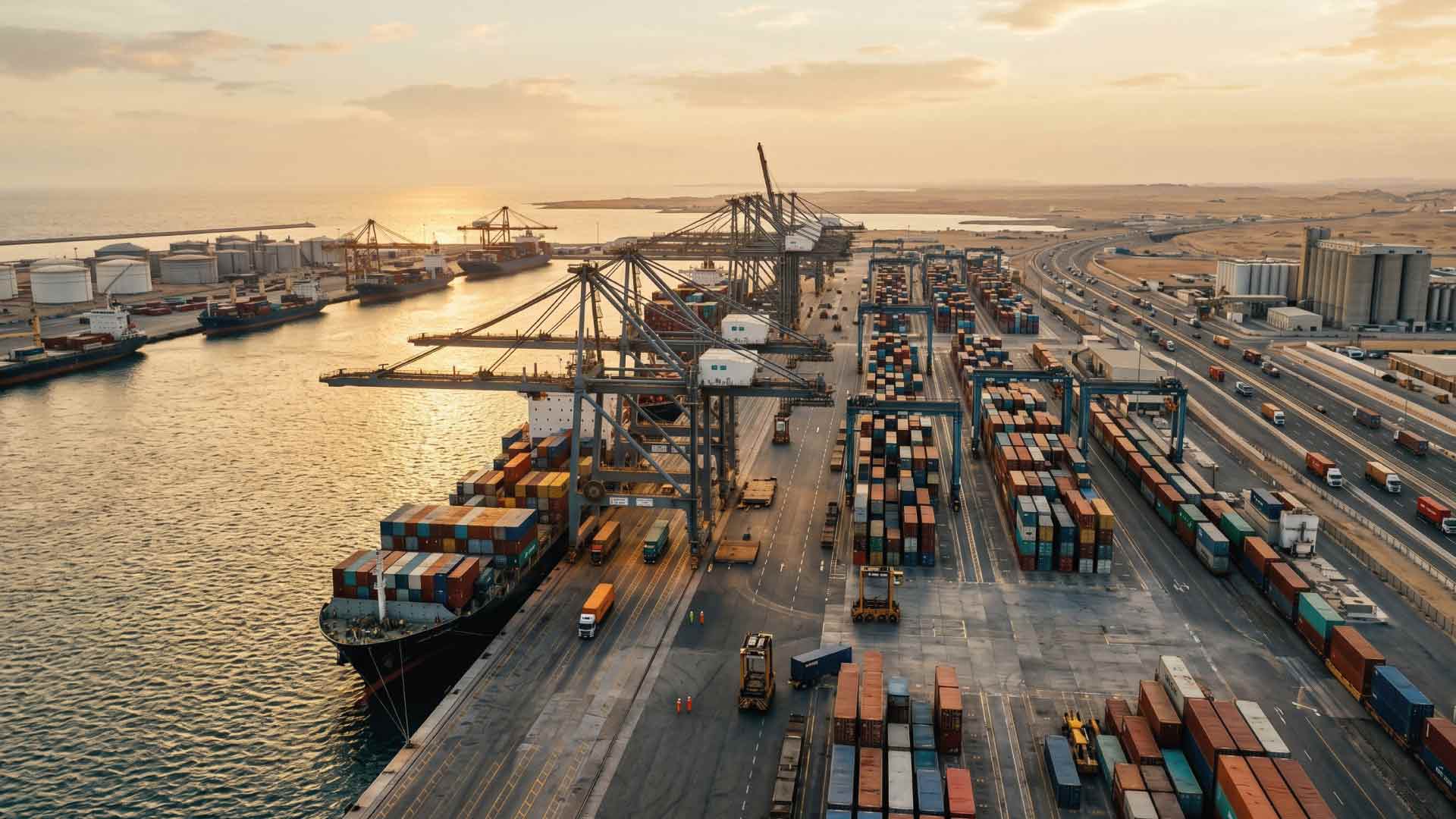
Saudi Ports, particularly those on the Red Sea coast, became safe havens, ensuring regional market stability. Reports on container handling in Saudi ports 2025 recorded record growth, with Container handling rates increasing by over 10%. The Arab Center explains that transshipment and ship-to-ship operations played a vital role in enhancing the efficiency of operating ports as a competitive advantage. Thus, Saudi Arabia at the heart of the Gulf crisis emerged via Jeddah Islamic Port as a strategic alternative to reduce dependence on the threatened straits. The Kingdom provided alternative supply chains via the Red Sea and redistribution services for Gulf markets with high flexibility. Infrastructure in Saudi Arabia during crises shows the importance of how companies use Red Sea alternatives for sourcing to avoid supply disruptions.
Request a plan for entering the Saudi market via logistics hubs.
Economic and market feasibility in attracting demand and redistribution
Feasibility is evident in reducing interruption losses in supplies and ensuring market continuity and the flow of basic commodities and medicines. Through the advanced Fasah platform, the Fasah platform and accelerating customs clearance were activated, placing Saudi Arabia at the heart of the Gulf crisis as a global model in risk management. We at the Arab Center for Consulting assist investors in evaluating the feasibility of logistics infrastructure projects to ensure Gulf supply security during crises. The Kingdom offers multiple logistics centers for storage and assembly, including investment opportunities in cold and pharmaceutical storage. This system aims to attract Gulf demand towards Saudi ports and enhance supply chain resilience for industrial companies. The Arab Center realizes that logistics crisis management for the private sector relies on solutions like what is the role of the Fasah platform in accelerating clearance during crises.
Contact us to prepare a feasibility assessment for multi-outlet storage and the Fasah platform.
Conclusion:
In conclusion, our analysis at the Arab Center shows that Saudi Arabia at the heart of the Gulf crisis was not just a trade corridor but transformed into an economic fortress protecting the region from supply chain fluctuations. The answer to how Saudi Arabia proved the feasibility of logistics investment during the crisis is clear through its superior ability to provide practical solutions to face any future disturbance and how to build a supply chain resilience plan in the Gulf efficiently. Saudi Arabia at the heart of the Gulf crisis, has become a magnet for logistics investments thanks to the integration of ports and digital legislation. We at the Arab Center for Consulting are committed to providing strategic insights through our website https://arabcenter.com.sa/en.
Frequently Asked Questions:
How does the Strait of Hormuz disturbance affect trade costs?
The disturbance leads to an immediate increase in shipping costs and maritime insurance premiums due to higher risks, which is reflected in final commodity prices and affects global supply schedules.
What logistics alternatives did Saudi Arabia provide to the Gulf?
The Kingdom provided alternative corridors through Red Sea ports and an advanced road network, in addition to storage centers and speed of clearance through the Fasah platform to ensure supplies do not stop.
How is the economic feasibility of infrastructure measured during crises?
It is measured by its ability to reduce financial losses resulting from downtime, ensure the flow of basic commodities, and maintain market stability, and attract investment even in difficult conditions.
Can Egyptian companies benefit from Saudi Arabia as a distribution center?
Yes, the Saudi logistics infrastructure allows Egyptian companies fast access to Gulf and Asian markets through advanced storage and re-export zones and a strategic location connecting continents.
Authored by Dr. Ahmed El-Imam